
Beyond Philanthropy (2/4): Improving Business Assets
In our previous post, we explored the commercial drivers behind corporate humanitarian engagement—accessing new markets and fueling innovation. Today, we turn inward. The 2017 OCHA study, “A study of private sector engagement in humanitarian action,”, reveals equally powerful internal returns: strategic humanitarian partnerships build a company’s most valuable assets—its reputation, its brand, and its people.
A trusted brand, a strong culture, and an engaged workforce are critical drivers of long-term value. Let’s explore how principled humanitarian action strengthens a business from the inside out.
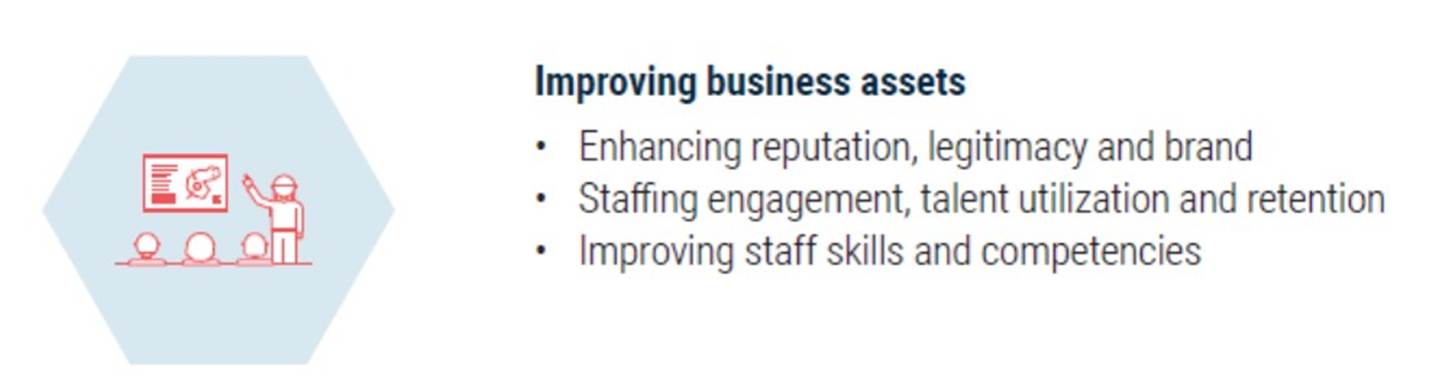
Enhancing Reputation, Legitimacy, and Brand
In today’s transparent world, customers, investors, and employees expect companies to be ¨good corporate citizens¨. Aligning with principled humanitarian organizations lends credibility and builds brand equity with authenticity that traditional marketing cannot match. Partnerships with respected humanitarian actors directly reinforce a company’s values and purpose.
The OCHA study highlights how best-in-class companies make humanitarian engagement central to their identity:
IKEA Foundation: With IKEA Foundation owning the business rather than the other way around, humanitarian work isn’t isolated under “Corporate Social Responsibility (CSR)”—it’s woven into business culture from the top down. CEO Per Heggenes puts it simply: “CSR is the way IKEA does business.” This deep integration strengthens brand trust among the global customer base.
UBS Optimus Foundation: UBS illustrates how targeted, meaningful work can enhance client relationships and reinforce corporate values. By focusing on specific, measurable outcomes, the foundation provides a tangible expression of the company’s commitment. Ann-Marie Sevcsik explains: “We work with trusted local and international partners to enable the most effective response possible, and we share this information among the global staff of UBS, including UBS client advisors who are able to discuss these topics with individual clients directly.”
By acting with purpose and transparency, companies differentiate themselves in crowded markets, winning loyalty and earning long-term legitimacy.
The Ultimate Human Capital Strategy: Engagement and Retention
One of the OCHA study’s most striking findings is humanitarian engagement’s impact on human capital. In a competitive talent market, purpose becomes a powerful magnet. Sixty-seven percent of business respondents cited “staff engagement, talent utilization and retention” as a central motivation for their humanitarian engagement.
Purpose-driven engagement creates a virtuous cycle. As Paul Musser of MasterCard explains, it first helps to attract top-tier talent who might otherwise gravitate to consumer tech giants. When potential hires understand that their technological skills could “make a change in Uganda’s school systems,” it transforms their perception of the company. This is employee attraction. Once on board, this connection to a greater good deepens their engagement, connecting daily tasks—whether coding in a headquarters or managing logistics in a regional hub—to a tangible, positive global impact. When an employee on the night shift understands their work ensures someone is fed in Yemen, it forges a powerful sense of motivation.
This isn’t just an anecdotal benefit; it’s a cost-effective strategy. Kathrin Mohr of Deutsche Post DHL, which deploys staff in Disaster Response Teams, points out the surprising efficiency of this approach: “Compared to many other HR methods to motivate employees, humanitarian engagement is very cost effective.”
Forging Expertise Under Pressure
Deploying employees into humanitarian contexts does more than motivate them; it forges new skills. These assignments are an accelerated leadership and development program, teaching competencies that are difficult to replicate in a traditional corporate environment.
As Kathrin Mohr of Deutsche Post DHL observes, employees gain invaluable experience from their fieldwork: “These skills include not only technical competencies, but also teamwork skills, stress management and crisis management.”
Conclusion: ROI Through Brand Strength and Empowered Teams
Investing in humanitarian action is investing in your business’s core. It strengthens your brand, builds a culture of purpose, and yields a workforce that is more skilled, engaged, and loyal. Far from being accidental perks, these are strategic returns—critical for sustainable, long-term success.
Coming up next: Building strong internal assets is essential—but in an unstable world, many companies are also motivated by risk reduction and resilience. In our next post, we’ll explore why protecting communities is the smartest way to protect your business.
